Reface, Refinish or Replace Your Custom Cabinets
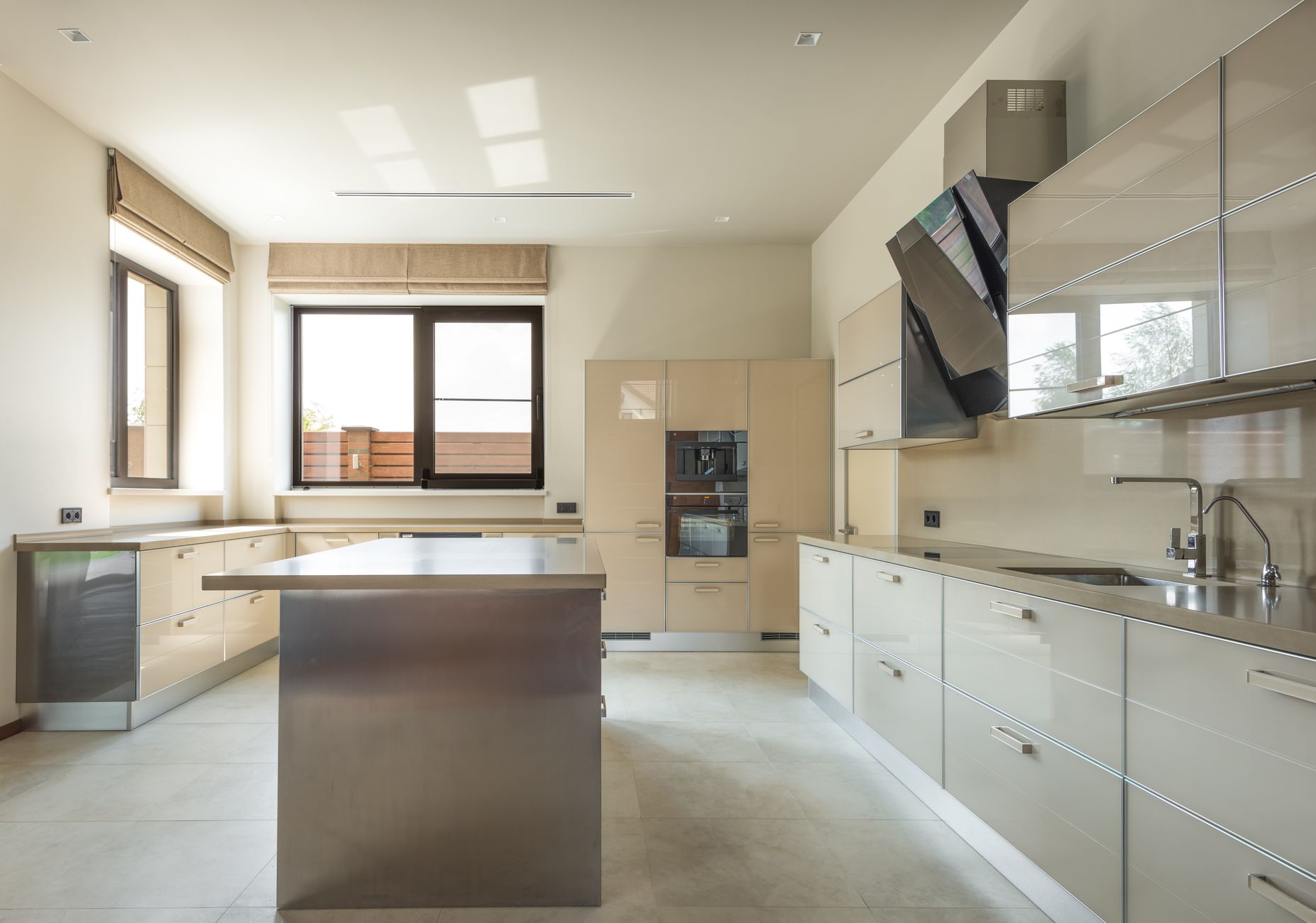
There is a decision point in most kitchen projects where the budget and the ambition meet, and it usually looks like this: the layout works, the boxes are sound, but the doors are dated and the whole room feels tired. Replacing everything is a large number. Doing nothing is unsatisfying. Between them sit refacing and refinishing, and both are widely misunderstood.
The Custom Cabinets Yakima Works company view, and the view of most people who do this work honestly, is that the right answer is determined almost entirely by the condition of the boxes and by whether the layout is actually working. Get those two questions answered first and the rest follows.
The three options, precisely defined
Refinishing means keeping the doors and boxes and changing only the surface. Existing doors are cleaned, degreased, sanded or chemically deglossed, primed and sprayed. Boxes are done in place. Nothing is replaced.
Refacing means keeping the boxes and replacing everything visible. New doors and drawer fronts, and a veneer or laminate skin applied over the face frames and any exposed cabinet sides so the whole thing matches. Hardware and often drawer boxes and hinges are replaced at the same time.
Replacing means new cabinets throughout, and it is the only option that lets the layout change.
They are frequently discussed as points on a single scale of cost, and that framing is misleading, because they solve different problems.
When refinishing is the right call
Refinishing suits solid wood doors in good condition where the only problem is colour. A raised panel oak kitchen from the nineties, structurally fine, with sound joints and doors that still hang straight, is an excellent candidate for paint.
It is the cheapest option by a wide margin. It generates no waste. It can be done in under a week.
The limits are real though. Refinishing cannot change the door style, so a dated profile stays a dated profile in a new colour. It works poorly on thermofoil doors, where a vinyl skin is heat bonded to an MDF core, because paint does not adhere reliably to that skin and the skin itself often peels near the dishwasher. It works poorly on heavily grained oak unless you want the grain to show through the paint, which some people do and some emphatically do not. And an in place spray finish, however carefully masked, will never be as durable as a factory finish applied in a controlled booth.
The most common regret with refinishing is discovering afterwards that the colour was not really the problem.
When refacing makes sense
Refacing suits a kitchen where the boxes are solid, the layout works, and the doors are either the wrong style or beyond refinishing.
It gets you a genuine change of style. You can go from raised panel oak to flat slab, from partial overlay to full overlay, from stained to painted, and the result looks like a new kitchen from any normal viewing distance. Costs typically land somewhere around half of a full replacement, though the range is wide.
It is also fast and comparatively clean. Most refacing jobs run a few days rather than a few weeks, and the kitchen stays broadly usable. Nothing goes to landfill except the old doors.
The requirements are strict and they are worth stating plainly. The boxes must be sound, square and firmly attached to the wall. The face frames must be in good condition, because the new skin is bonded to them and any softness or water damage underneath will telegraph through or fail. And you must be genuinely content with the layout, because refacing freezes it in place.
That last point is where most refacing regret originates. A kitchen with an awkward corner, a badly placed appliance or insufficient drawer storage still has all of those problems after refacing, at a cost of thousands, and now nobody wants to touch it again for a decade.
When to replace
Replace when the boxes are failing, when the layout is wrong, or when the storage is fundamentally inadequate.
Failing boxes means water damaged floors in the sink base, swollen particleboard, racked cabinets with doors that will not align, or units that have separated from the wall. Skinning over a failing box is money spent on a surface attached to something that is not going to last.
A wrong layout means the work triangle does not function, the refrigerator door blocks a walkway, there is no landing space next to the oven, or the room simply needs an island it does not have. No amount of surface work fixes geometry.
Inadequate storage is the underrated one. Older kitchens are largely fixed shelf base cabinets, which means kneeling and reaching into the dark. Modern base cabinetry is drawers, and the difference in daily usability is dramatic. Some of this can be retrofitted with pull out trays, and that is a genuinely good intermediate move, but it is limited by the cabinet openings you already have.
Replacement also lets you change cabinet heights, take uppers to the ceiling to recover the dead space above them, and specify appliance garages, deep pan drawers and proper corner solutions. If storage is the actual complaint, replacement is usually the honest answer.
The hybrid nobody mentions
Kitchens are not required to be treated uniformly, and the best value frequently sits in a mix.
Replace the run that has the problem, the sink base and the corner cabinet, and reface the rest. Or keep all the boxes but replace the base cabinet interiors with drawer inserts while refacing the exteriors. Or reface the perimeter and build a new island, which is where a kitchen usually gains the most function per dollar.
A supplier who only ever recommends one of the three options is telling you about their business model rather than about your kitchen.
How to assess your own boxes
You can do most of this yourself in twenty minutes.
Empty the sink base and look at the floor of it and the back corners. Discoloration, swelling or a soft feel under a thumb means water has been getting in and the box is compromised.
Open and close every door and look at the gaps. Consistently uneven gaps that hinge adjustment will not fix suggest racked boxes.
Push firmly sideways on a cabinet side panel. Movement or a creak means the box is not rigid or is not properly fastened.
Pull a drawer fully out and look at the corners and the bottom. Sagging bottoms and separating corners are cheap to replace individually but tell you about the general standard of construction.
Check whether the boxes are plywood or particleboard by looking at a cut edge inside, usually visible at a hinge hole or where a shelf pin sits.
Finally, stand in the kitchen and cook a meal in your head. Where do you put the hot pan coming out of the oven. Where does the shopping land. Where do two people collide. If the answers are unsatisfying, the doors were never the issue.
What each option does to the schedule
Time in a kitchen without a kitchen is a real cost that quotes never show.
Refinishing typically takes under a week, and the kitchen stays partly usable throughout. Doors come off, get sprayed elsewhere or in a masked area, and go back. The main disruption is dust control and the smell of finish.
Refacing usually runs a few days to about a week. The boxes stay in place, so the counters, sink and appliances remain connected and working. This is the least disruptive option relative to how much it changes.
Replacement is measured in weeks, not days, and it usually cascades. The counters come off, which means the sink and cooktop are disconnected. The backsplash comes off, which means wall repair. New cabinets go in, then templating happens, then there is a wait for the counters to be fabricated, and only then does the plumbing get reconnected. That gap between cabinet install and counter install is commonly one to three weeks with no sink.
None of that is an argument against replacing. It is an argument for knowing the number before you commit, and for asking specifically how long you will be without a sink.
The order to make the decision in
Assess the boxes. If they are failing, replace, and stop.
If they are sound, ask whether the layout works. If it does not, replace, and stop.
If the boxes are sound and the layout works, ask whether you want a different door style. If you do, reface. If you only want a different colour and the doors are solid wood in good condition, refinish.
That sequence answers it in almost every case, and it puts the two questions that actually matter ahead of the one that feels most urgent.